
What types of palm trees are there? Characteristics and curiosities

There are several types of palm trees that are often featured in natural landscapes around the world, and even in gardens with the most tropical design. Although they are not the plants of choice for certain climates, they are very beautiful and you can have them for their ornamental beauty.
In fact, it is possible to grow them in a controlled way and choose structures such as a multitunnel greenhouse, a gothic greenhouse or even a multi Wide-Span greenhouse. With this article you will learn more about palms and choose one or more varieties according to your preferences.
What is a palm tree?
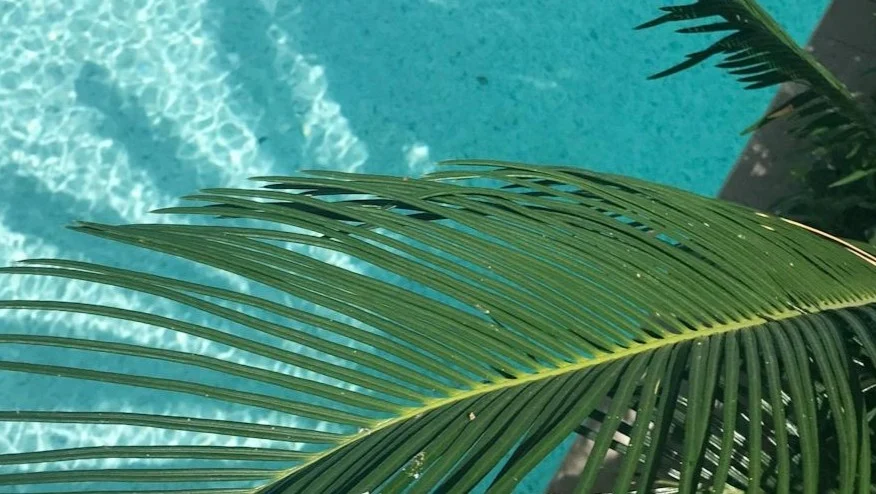
The palm tree is a plant that comes from the Arecaceae family. They are known for having a cylindrical trunk and a crown with large, leafy leaves. In addition, they are plants that adapt very well to different climates and are often the symbol of the most exotic gardens.
On the other hand, palms vary greatly in size, with some being very tall and slender, while others are very short and have thick trunks.
Characteristics of palm trees
Before getting to know the types of palm trees, let's review their general characteristics:
- Trunk: They usually have a straight and cylindrical trunk, but can have different shapes depending on the species.
- Leaves: The leaves are composed of leaflets that form a typical crown at the top of the trunk.
- Roots: They have a superficial root system that allows them to absorb all the nutrients in their environment.
- Flowers and fruits: Many do not remember, but some palms produce showy flowers and fruits such as coconut.
- Adaptability: They have the ability to grow in a variety of soils and climatic conditions.
What types of palm trees are there?
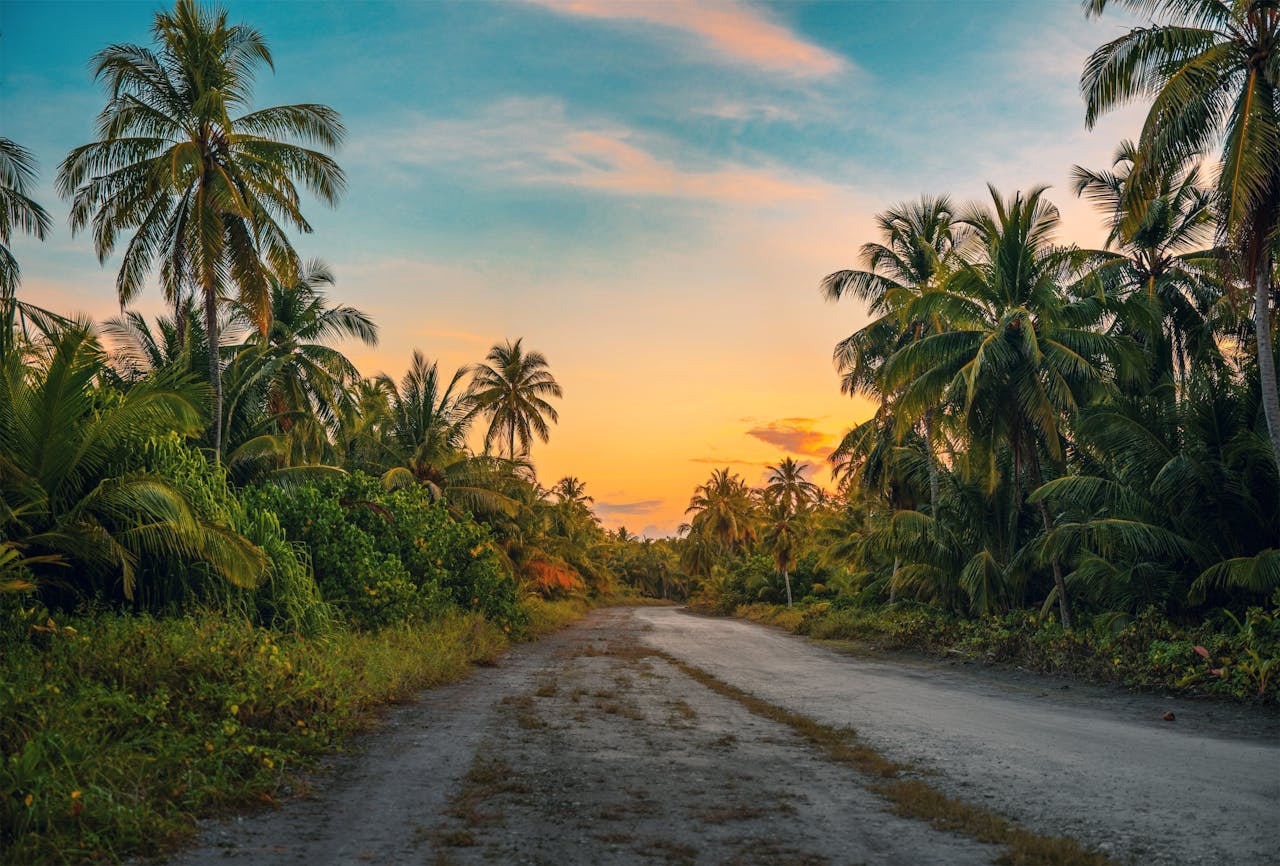
Now we will get to know the types of palms that exist. Once you find out, you can choose one or more to grow.
Cyrtostachys renda
This is known as the red palm. Cyrtostachys renda has red leaves that add a more exotic touch to any garden.
- It is a medium-sized species
- Excellent for residential spaces
- It copes well with warm weather and well-drained soils.
- Resists wind and temperature variations very well.
Caryota urens
Caryota urens is known as the bamboo of life. This type of palm has pinnate leaves and a fruit that is used for the production of palm sugar.
- It has a branched corral growth system.
- It is medium sized.
- It needs a humid and shaded environment to grow well.
Howea forsteriana
Howea Forsteriana is also known as Kentia after the British Royal Family. It is an elegant and low-maintenance palm.
- It has long leaves that are ideal for outdoors.
- It can purify the air
- Adapts to different light conditions, although it prefers direct light.
Chamaerops humilis
Chamaerops humilis is one of the few palm trees native to Europe, specifically the Mediterranean region. It is a dwarf palm and is used in many gardens.
- It is resistant to cold
- Adapts well to various soil types
- It is an option for many regions and gardens.
Chamaedorea elegans
We continue with the Chamaedorea elegans, which you can also find under the name of Lady Palm. It is a small, compact plant that grows well indoors.
- It has thin, arched leaves
- Ideal for enclosed spaces
- Thrives in low light and low humidity
- Good for air purification
Cocos nucifera
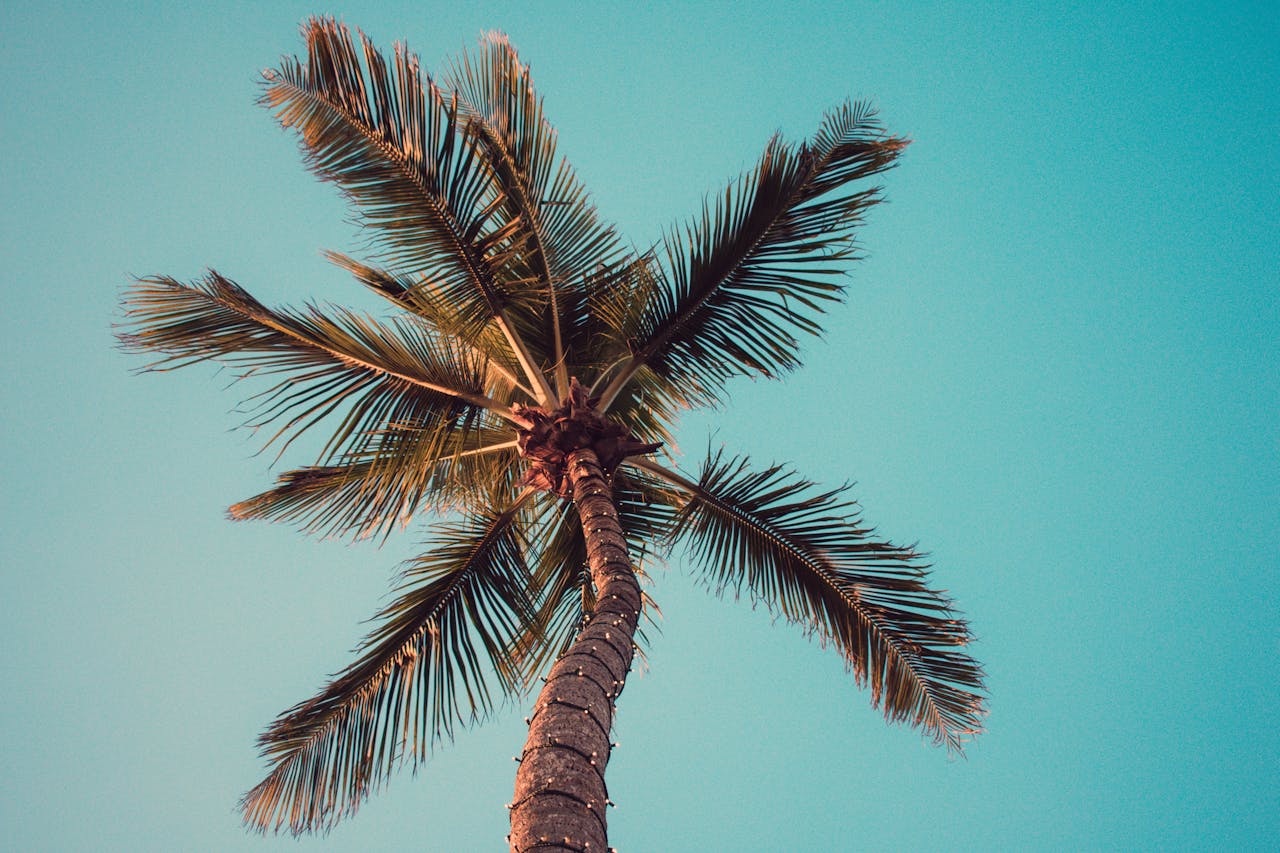
Cocos nucifera is known as the coconut palm. It is an emblematic plant of tropical regions and is one of the best known types of palm tree.
- Its fruits with coconuts
- Can reach great heights
- They need a lot of sun and well-drained soil.
- They are adapted to warm, coastal climates.
Dypsis decaryi
Dypsis decaryi is also known as Calasanz palm. This plant has green leaves and a branched trunk that gives it a very leafy and bushy appearance .
- It needs a warm climate and constant humidity.
- It is usually found in tropical and subtropical environments.
- Moderate maintenance.
Phoenix dactylifera
Phoenix dactylifera is known as the date palm. It is so named because its fruits are dates, a very nutritious food.
- They are large palms and offer good shade.
- They need arid climates and well-drained soils.
- It is emblematic in desert regions.
Jubaea chilensis
The Jubaea chilensis, or Chilean palm, is one of the longest-lived and slowest-growing palms in existence.
- It has robust leaves and a thick trunk.
- They are very resistant to cold.
- Their maintenance is minimal, although they need ample space to develop.
Roystonea regia
To close, we have the Roystonea regia, known as the royal palm and famous for its slender trunk.
- They are often used in avenues and public squares.
- It prefers warm and humid climates.
- It is one of the most beautiful.


