
How to care for anthurium? Care guide and characteristics

Many people do not know how to care for anthuriums, and it is important to understand this in order to preserve them. This is one of the most elegant and striking indoor plants. But it is not only sought after for its intense and showy colours, but also because it is considered more resistant than other options for the garden.
To keep this species in good condition, you must understand its needs and provide it with an ideal space. You can even start planting them in greenhouses, such as the multi-tunnel, Gothic greenhouse or a multi wide span. In this article, I will explain much more about the beautiful anthurium.
- What is anthurium?
- Characteristics of the anthurium or anturio
- What types of anthurium are there?
- How to care for anthurium?
What is anthurium?
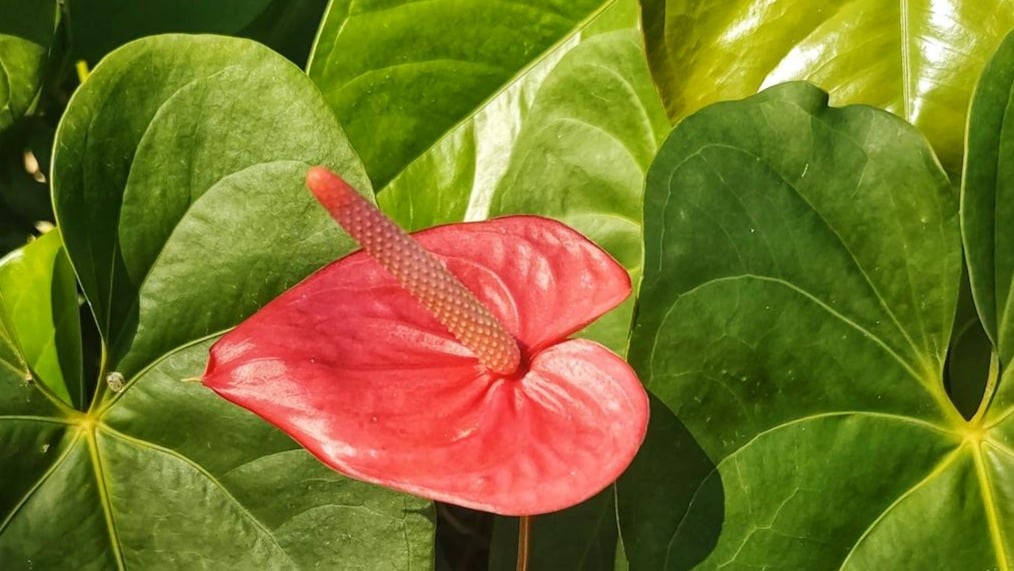
Before learning how to care for anthurium, let's explain what it is. You may also find it under the name anturio, and it is a tropical plant that comes from Central and South America. It belongs to the Araceae family and has bright green leaves with striking coloured inflorescences.
Behind all this lies its true flower, which is found in the central spadix. Thanks to this attractive feature, it has become one of the most widely used plants in interior decoration.
Characteristics of the anthurium or anturio
Its main features include:
- Large leaves, heart-shaped and deep green in colour.
- Flowers in the shape of a spathe, with very striking colours.
- Highly resilient as a houseplant if properly cared for.
- Long-lasting flowers, which can remain fresh for weeks.
- They can grow between 40 and 80 cm in height, but this will depend on the variety.
What types of anthurium are there?
You should know that there are more than 600 species of anthurium, but the most common ones in homes and nurseries are the following:
- Anthurium andreanum: This is the most popular variety and has red, pink or white flowers.
- Anthurium scherzerianum: This is famous for its spirally curved spadix.
- Anthurium clarinervium: It is very decorative because it has dark green leaves with white veins.
- Anthurium crystallinum: It is similar to clarinervium and has velvety leaves.
How to care for anthurium?
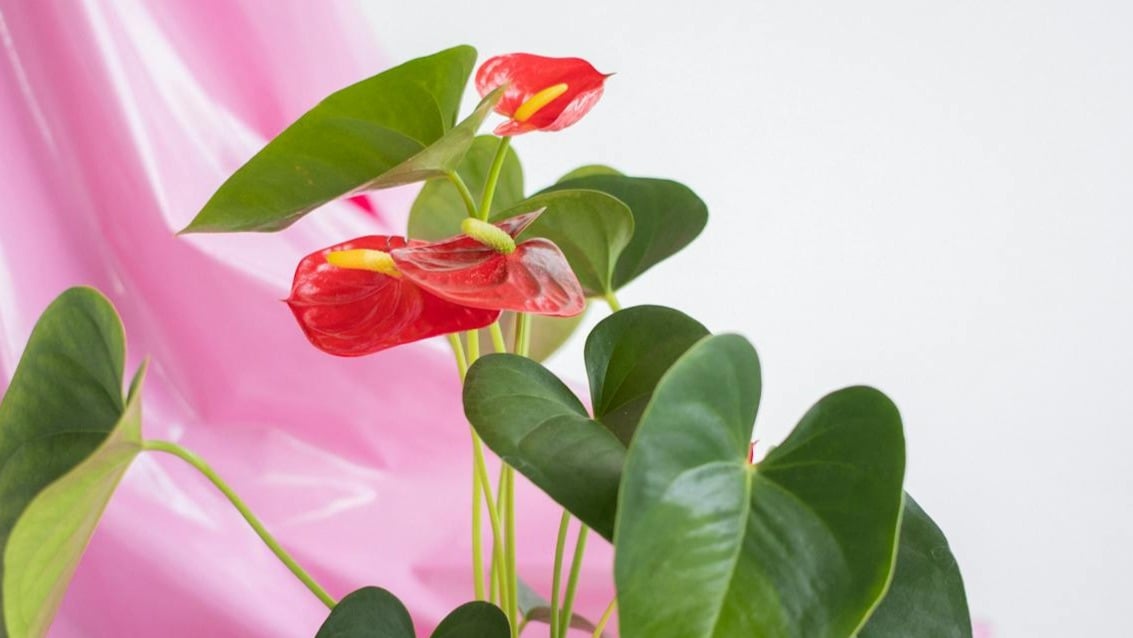
Caring for anthurium plants is straightforward, but you must first understand everything they need. We will explain this here.
Adequate lighting
It is a plant that needs bright, indirect light. However, it should never be exposed to direct sunlight, as this can burn its leaves and flowers. Try to choose a spot near a window facing east or north, which is ideal.
Ideal temperature
The anthurium flower grows best in temperatures between 18 °C and 25 °C. It does not tolerate intense cold or sudden changes in temperature. Try to keep it in a warm environment protected from draughts.
Humidity
As a tropical plant, it requires high ambient humidity. It is recommended to spray its leaves with water (without wetting the flowers) or place a humidifier nearby. It can also be placed on a dish with water and stones to increase the humidity around it.
Adequate watering
Watering should be moderate, avoiding both excess and complete dryness of the substrate. Ideally, water when the top layer of soil is dry to the touch. It is also important to check that the pots have good drainage.
Abono
It is recommended to apply liquid fertiliser every 15 days during spring and summer. This should be rich in potassium and phosphorus to promote flowering. In autumn and winter, the frequency can be reduced to once a month.
Sustrato
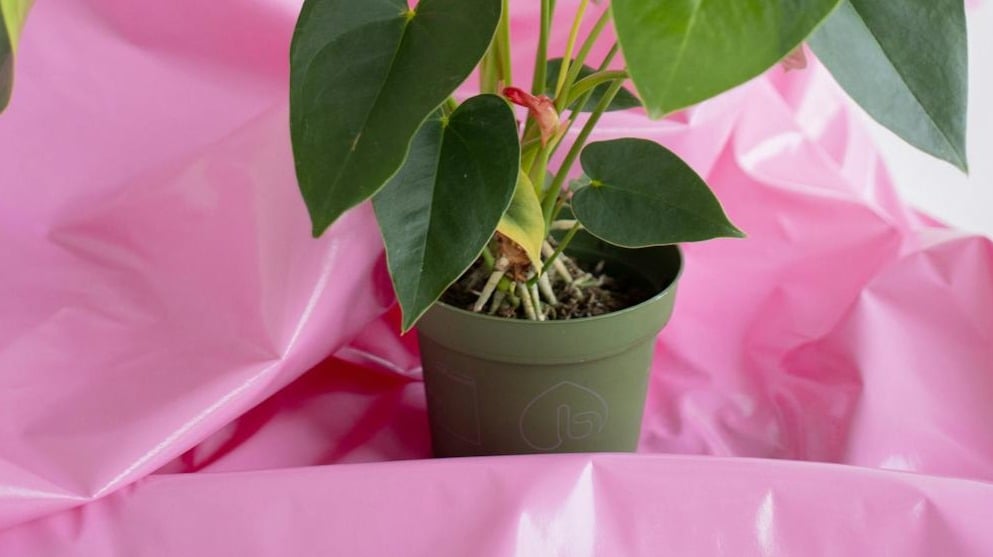
Anthuriums need a substrate that is light, loose and well aerated. This can be a mixture of peat, coconut fibre and perlite to maintain the balance between moisture and oxygenation of the roots.
Leaf cleaning
At this point, remember that large leaves tend to accumulate dust, which hinders photosynthesis. They should be cleaned regularly with a damp cloth to keep them shiny and healthy.
Transplant
It is advisable to repot every 2 or 3 years, when the roots fill the pot. However, the best time to do this is in spring because it coincides with the start of the growing season.
Pests and diseases
Finally, you must take into account the pests and diseases that they can suffer from. Although they are resistant, they are often affected by: cochineal insects, aphids, and mites. Similarly, they attract fungi when there is excess moisture in the substrate.
Now you know more about how to care for anthuriums. That is why it is advisable to start in controlled environments such as the greenhouses at Fertri.
These structures are of good quality and adapt to different projects. Some models you can check out are: the multitunnel greenhouse, Gothic greenhouse and multi wide span greenhouse. Feel free to explore and ask any questions you may have.


